Monday, December 05, 2011

Practice Conscientious Compassion


Each of us has some task, some way to practice conscientious compassion. The question is: How do we find that task? To find it, a specific method can be prescribed. 

At the outset, practice the usual meditation on compassion, perhaps for 20 or 30 minutes.

Then focus your attention on several of the formidable problems that loom before humanity today:

  • futile and self-destructive wars,
  • rampant military spending,
  •  global warming,
  •  violations of human rights,
  •  poverty and global hunger,
  •  the exploitation of women,
  •  our treatment of animals,
  •  the abuse of the environment, or
  •  any other concern that comes to mind. 

Reflect briefly on these problems, one by one, aware of how you respond to them. 

At some point, you will start to recognize that one of these problems, more than the others, tugs at the strings of your heart. These inner pangs suggest that this is the particular issue to which you should dedicate your time and energy.

- Bhikkhu Bodhi, "The Need of the Hour"

Tuesday, November 29, 2011

PARANOID ABOUT PREDATORS

There is a creative writing technique that involves producing stories that link seven words picked at random from a dictionary.  The last word becomes the title of the piece and the first three words must all be used in the first paragraph. Try for less than 250 words in total.
The procedure fascinates me. Plausible fictions can be quickly cobbled together from a small number of randomly selected elements. How is this possible? Why is this possible?
The mind is trying to ‘make sense’ of the various ‘bits’ of ‘mental stuff’ that are available. New stuff is continuously arriving through the sense doors and being categorised as ‘similar’ to stuff in the ‘memory’. Past knowledge of cause and effect relationships (whether ‘right’ or ‘wrong’) can then be used to guide responses to the external stimuli.
Consider what might be going through the mind of a Thompson’s Gazelle. “What is that smell? Why have the birds stopped singing? What is that spotty thing moving slowly through the long grass?” There are the makings of a nothing-but formula –
smell + sound + sight = cheetah = death = panic response = enhanced ability to run away
But we can dig deeper into this thought experiment and create a more subtle set of links and of cause and effect chains.
We need a lot of coding and decoding to move information from here to there. Physical inputs from the sense doors move along the sensory neurones to ‘appropriate parts’ of the brain where they are ‘conceptualised’, and ‘judged’ (pleasant, neutral, unpleasant). And they are then passed on to the parts of the brain that deal with responses in physiology (hormones), psychology (thoughts and emotions) and movement (muscles and bones).
The system evolved rather than having been designed from scratch. ‘Redundancy’ is to be expected. Traces of the main stimulus/ response chains will diffuse to other areas of the brain where they contribute to the brain’s ever-changing, integrated ‘world view’.
We can imagine what the Gazelle might be feeling and thinking. Panic attack, red alert, cheetah (or is it?) in the long grass to the south. Head north at warp speed – shut down other life support systems so that all energy can be used for running.
But it might be a trap. Keep a look out for other cheetahs waiting in the north. Keep yourself between the cheetah and the young calves. Be prepared to counterattack if need be. Consider if there might be other dangers – unleash the paranoia. It is better to be safe than sorry.
Making sense of the world involves combining sensory inputs with memories. From the past and the present we create all manner of imagined futures with incredible speed. The human brain and its language ability are fine tuned story telling instruments. They have served us well over the ancestral years. Perhaps it is time to rethink restlessness, anxiety, stress, depression, neurosis and paranoia. In these changing times real sanity rests with those who are abnormal in a creative sort of way. 


ACTIVITY: Drag out a dictionary and write a seven word story.
WARNING :You will be stunned by what your brain produces.

Wednesday, November 23, 2011

Sounds True

Sounds True A lot of good stuff

my booklets available for download

Monday, November 14, 2011

story of story


BBC World Service - “A short history of story”

(Noah Richler) (programme 1 and 2)
IPlayer
Podcast
>>>>>>>>>>>>>>>>>>>>>>>>>>>>>>>>>>>>>>>>>>>>> 
Part 1.
Noah Richler traces the development of storytelling from the earliest creation myths through to today's online gaming and the recording of our personal lives by way of social media.

In the first programme he shows how creation myths and cautionary tales were created to explain humans' place in the world, and how we should conduct ourselves in it.

And when groups came into contact with each other, myths and epics were invented which showed how they might deal with the threats and danger that sprang from conflict.

The arrival of the novel he argues came at a time when society felt less threatened and so could explore the highways and byways of living our lives.

Among those taking part in the series are Steven Pinker, Professor of Psychology at Harvard University, anthropologist Hugh Brody, Canadian poet Robert Bringhurst and artificial intelligence expert David Ferrucci.

Part 2
Noah Richler traces the development of storytelling from the earliest creation myths through to today's online gaming and the recording of our personal lives by way of social media.

The second programme looks at how creation myths and epics in the 21st Century continue to be part of our experience of storytelling, and that through computer games and social media people assume different identities – hero, villain, warrior, and peacemaker.

The series ends with the thought that perhaps we humans are the servant of the story, the vessel through which story lives, and it's the survival of 'story' that is paramount.

Tuesday, October 25, 2011

When You Prepare Food

When you prepare food, do not see with ordinary eyes and do not think with ordinary mind.

Take up a blade of grass and construct a treasure king's land; enter into a particle of dust and turn the great dharma wheel. Do not arouse disdainful mind when you prepare a broth of wild grasses; do not arouse joyful mind when you prepare a fine cream soup.

Where there is no discrimination, how can there be distaste? Thus, do not be careless even when you work with poor materials, and sustain your efforts even when you have excellent materials.

Never change your attitude according to the materials. If you do, it is like varying your truth when speaking with different people; then you are not a practitioner of the way.
   

– Zen Master Dogen, "Instructions for the Tenzo"
Tricycle Daily Dharma October 25, 2011
http://www.tricycle.com/-food/instructions-tenzo

Saturday, October 22, 2011

magnificent moaners

In the old days those who were prone to anxiety, stress and depression were less likely to get eaten by lions than were the cheery, rose-tinted optimists. So the morose had more children and morosity mushroomed. Paranoia is in our genes for a reason.

So, let us put our hands together for the mutterings of the moaning morose. They are the bright hopes for the future. Or, if that seems over the top, then let us at least give them credit for being critical of and resistant to the status quo. As R D Laing (more or less) noted, in an insane world the truly sane are labelled as nutters.

Wednesday, October 12, 2011

Free Shopping for Elders

George G Clark, 12 October 2011
There is a small supermarket 325 footsteps east of my front door.  Every day a cornucopia of goods is delivered by the invisible hand of commerce and a series of large trucks. The goods are attractively arranged on the shelves where I go hunting and gathering for the bits and pieces of plants and animals that I need to survive. Then I use a plastic card to connect to a computer that links to the data clouds of cyberspace to arrange the magical movement of funds from my bank account to that of the supermarket.

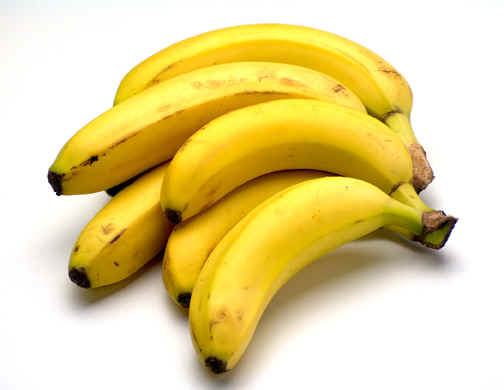
But the computer does many clever things apart from shifting cash. For example it keeps track of stock and lets ‘HQ’ know how much of what needs to be delivered in the next few days and therefore how many bananas to buy from Belize.

The computer also keeps track of what you have bought in the past and provides you with customised recommendations for items that match your profile. This can be seen as either (a) very useful or helpful or (b) as unwelcome interference in what occupies your attention. This raises the issues of advertising and the manufacture of desire! If you don’t know it exists you won’t buy it. Beware of fads and fashions!

In the old days families would grow most of their food in their own gardens. These days most gardens are landscaped with low maintenance, lifeless gravel; and with cement and tarmac to give parking space for the family car(s). The subsistence economy is now well gone as is the freedom from the need for money.  We are all now wage slaves in the cash economy.

We need food. We need money to buy food. We need a job to earn the money. Many modern jobs are boring, repetitive and do not pay well. The workers grunt for peanuts and the managers and shareholders slurp the profits. The rich get richer and the poor get poorer.

I am now entering the post-work stage of life. I was always careful with money and now have savings and a modest pension. And - I am not a dedicated follower of fads and fashions. So - I no longer have to work for shopping money. I have unlocked the chains of wage slavery. I am FREE FROM all of that.

But what am I FREE FOR?

To wholeheartedly breathe, eat, pee and poop?

I am a fleeting item in the global ecosystem. Commerce conspires to bring Belizean bananas to a small supermarket. 650 footsteps there and back. Peel it, pop it in my mouth, extract the goodness. The remains are in the faeces that are flushed into the sewerage system that runs past my front door and leads to the North Sea and thus back across the Atlantic in the Gulf Stream to Belize.

Round and round and round in the circle game.
[Joni Mitchell]

Monday, September 19, 2011

Attending to Attention


George G Clark, 18 September 2011
Cerebral stuff includes conscious, semi-conscious and unconscious thoughts, feelings and emotions. It is logistically impossible to capture it all and this begs some tough questions - (a) which bits are, or are not, featured in your attention centre?; (b) what are the decision rules that govern the choice?; (c) what is the action agency?; and (d) is the system open to change and, if so, by whom and how?

We are not wired for 24/7 busyness. We need time out for sleep and for waking stillness. We can then process our inputs by reacting and responding to them in a considered and appropriate way. Your vital brain is forever churning the cerebral stuff, linking new bits to old, and creating story fragments with feeling tones ranging through pleasant and neutral to unpleasant.

BUT those who were neutral to signals from nearby lions were soon dead. The same fate awaits those who challenge the hierarchy and the groupthink. It is better to overreact by being hyper vigilant. Nervousness and paranoia are useful for survival in nature and will therefore have been cemented in place by evolution.

BUT there is often division of labour amongst ‘social’ animals. Hamadryas baboons appoint particular individuals as vigilant watchmen and the rest of the troupe can therefore drop their guard. Some individuals can thus be at ease and focus attention on other, important things (eg screenwriting for popular soap operas).

BUT then consider the ‘gated’ compounds for the human haves (them) when they live close to the dangerous have-nots (us). Then consider ‘who guards against the compound guards’? – evolved paranoia wins again! They are out to get us. The price of authenticity and freedom is to pay attention to, and thus have some control over, the cerebral stuff that passes through your attention centre.

Socrates reckoned that ‘the unexamined life is not worth living.’ But he was a boring old fart who lived in ancient times. Is it not better to be a conscientious, capitalist consumer and a fanatical follower of frivolous fads and ephemeral fashions? What sort of cerebral stuff tends to occupy your attention centre? Do you feel a need for change? Are you paranoid enough to survive in modern civilisation?

Hegemony doesn’t seem to rule - OK