Friday, September 21, 2012
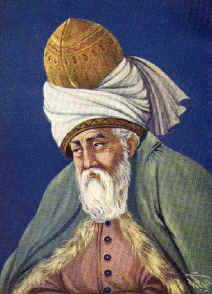
Rumi
“Yesterday I was clever, so I wanted to change the world. Today I am wise, so I am changing myself.” ― Rumi
Monday, September 17, 2012
Living Beyond Words
Tricycle Daily Dharma September 17, 2012
Zen practice is always about returning to that place where there are no words. Early on, I realized that to use words, you have to live life beyond words, before words, without words. Only then do you have the right to speak.
- Seido Ray Ronci, "No Words"
Monday, August 06, 2012
All-encompassing Mindfulness
Tricycle Daily Dharma August 6, 2012
All-encompassing Mindfulness
"If ‘mindfulness’ is to create genuine change in our society, it must involve being mindful of more than just our own need for comfort, good health, or serenity.
It must entail being mindful of the social and economic forces that allow some to prosper while others struggle, forces that promote and perpetuate certain behaviors and thought patterns while discouraging or suppressing others." ...
"Wisdom is not necessarily synonymous with comfort, or better health, or even happiness. If Wisdom 2.0 (a conference) had addressed the sometimes painful conflict between technological growth and human needs, it would have been forced to challenge its attendees, its speakers—and yes, its corporate sponsors. It could be argued that this, and not feel-good sessions for acquisitive millionaires, is the work of wisdom.
Philosophers like Mortimer Adler, along with later thinkers like the economist Kenneth Boulding, created a simple hierarchy, known as DIKW, that was applied to early thinking about computer technology. It stood for Data, Information, Knowledge, and Wisdom, with data at the lowest rung on the ladder and wisdom at the highest. Each of these rungs is important.
But data and information are not knowledge, and knowledge is not wisdom."
- Richard Eskow, “Buying Wisdom"
Monday, July 30, 2012
ryokan
At night, deep in the mountains, I sit in meditation.
The affairs of men never reach me here: everything is quiet and empty,
all the incense has been swallowed up by the endless night.
My robe has become a garment of dew.
Unable to sleep I walk out into the woods
--suddenly, above the highest peak, the full moon appears.
(Ryokan)
The affairs of men never reach me here: everything is quiet and empty,
all the incense has been swallowed up by the endless night.
My robe has become a garment of dew.
Unable to sleep I walk out into the woods
--suddenly, above the highest peak, the full moon appears.
(Ryokan)
Monday, July 23, 2012
making quagmires of their brain
a clip from one of my old songs
You'll find plenty question masters
making quagmires of their brain
The man said 'there are no answers'
They said 'you are insane'
For the audio version click HERE
You'll find plenty question masters
making quagmires of their brain
The man said 'there are no answers'
They said 'you are insane'
For the audio version click HERE
Sunday, July 22, 2012
unexamined
Some ancient Greeks reckoned that ‘the unexamined life is not worth living’. Some contemporary meditators notice that the unexamined life is full of mental proliferation (papanca) which gives rise to an ongoing flood of autonomous thoughts, moods and emotions.
The meditator notices that ‘I’ am not in control of the flood. It is rooted in the unconscious where ongoing and immediate inputs from the sense organs are churned with memories to generate thoughts, moods and emotions that generate patterns of behaviour that ensure survival on a daily basis and thus the chance of being a successful breeder in the longer term.
BUT – if ‘I’ do not control the generation of mental proliferations – who or what does? They are constantly changing. Can the mind (conscious or unconscious) turn in upon itself and be the agent of its own transformation? This begs the question of who or what controls the agent and who or what controls the controller.
Some meditators appreciate the idea of mindfulness. It is possible to notice the flood of thoughts, moods and emotions and to step back from it; to observe it from a safe distance. How long does a thought, mood or emotion last? Where was it before it appeared in the attention centre and where does it go to once it has passed through?
I tend to be intellectual. My world view embraces the expanding horizon from quantum to cosmos that stretches back to the Big Bang and forward to the death of our sun and its Universe. BUT the mind is not engaged with those things all the time. Other more detailed and fleeting thoughts, moods and emotions appear. There can be micro mindfulness.
The sense of smell kicks in to remind me of the burned toast at breakfast time; the sense of hearing kicks in to notice traffic passing in the street and birds singing in the garden; the kinaesthetic sense kicks in to raise awareness of slumping in the chair, and of an itch on the lower left leg. And then the memory sense kicks in with tax forms, the dishes that need washing, and the grass that needs mowing.
Conscious attention cannot be focussed on all the details all of the time. There are filters (how are they calibrated?) that cut the level of multi-tasking to manageable proportions. (Do people really multi-task or are they just good at rapid channel hopping in single-task mode?)
How long is a thought moment? How variable is a person’s attention span? The media people design their products on the assumption that the attention span is very short. Think of advertising and soap operas. Slogans and soundbites. Anything that demands focussed attention for more than a few seconds is ruthlessly cut back.
As an intellectual I specialise in holding on to complex thoughts for extended periods. As an absent minded professor I can easily lose track of space, time and my self for a couple of hours. It could be thought of as a pleasurable mind state but only in retrospect. There has to be an ‘I’ to experience pleasure. It is the same basic process for athletes in the zone and musicians in the groove. No self, no problem.
For a meditator the goal is to focus attention on the breathing and to have it stay there. If mental proliferation kicks in then this is noticed and attention is gently returned to the breath. Again and again. The path is made by walking. Be still and know. Then you are in a better position to examine your life and make it worth living?
The meditator notices that ‘I’ am not in control of the flood. It is rooted in the unconscious where ongoing and immediate inputs from the sense organs are churned with memories to generate thoughts, moods and emotions that generate patterns of behaviour that ensure survival on a daily basis and thus the chance of being a successful breeder in the longer term.
BUT – if ‘I’ do not control the generation of mental proliferations – who or what does? They are constantly changing. Can the mind (conscious or unconscious) turn in upon itself and be the agent of its own transformation? This begs the question of who or what controls the agent and who or what controls the controller.
Some meditators appreciate the idea of mindfulness. It is possible to notice the flood of thoughts, moods and emotions and to step back from it; to observe it from a safe distance. How long does a thought, mood or emotion last? Where was it before it appeared in the attention centre and where does it go to once it has passed through?
I tend to be intellectual. My world view embraces the expanding horizon from quantum to cosmos that stretches back to the Big Bang and forward to the death of our sun and its Universe. BUT the mind is not engaged with those things all the time. Other more detailed and fleeting thoughts, moods and emotions appear. There can be micro mindfulness.
The sense of smell kicks in to remind me of the burned toast at breakfast time; the sense of hearing kicks in to notice traffic passing in the street and birds singing in the garden; the kinaesthetic sense kicks in to raise awareness of slumping in the chair, and of an itch on the lower left leg. And then the memory sense kicks in with tax forms, the dishes that need washing, and the grass that needs mowing.
Conscious attention cannot be focussed on all the details all of the time. There are filters (how are they calibrated?) that cut the level of multi-tasking to manageable proportions. (Do people really multi-task or are they just good at rapid channel hopping in single-task mode?)
How long is a thought moment? How variable is a person’s attention span? The media people design their products on the assumption that the attention span is very short. Think of advertising and soap operas. Slogans and soundbites. Anything that demands focussed attention for more than a few seconds is ruthlessly cut back.
As an intellectual I specialise in holding on to complex thoughts for extended periods. As an absent minded professor I can easily lose track of space, time and my self for a couple of hours. It could be thought of as a pleasurable mind state but only in retrospect. There has to be an ‘I’ to experience pleasure. It is the same basic process for athletes in the zone and musicians in the groove. No self, no problem.
For a meditator the goal is to focus attention on the breathing and to have it stay there. If mental proliferation kicks in then this is noticed and attention is gently returned to the breath. Again and again. The path is made by walking. Be still and know. Then you are in a better position to examine your life and make it worth living?
Wednesday, July 18, 2012
Against the Stream
Tricycle Daily Dharma July 18, 2012
Against the Stream
The unflinching light of mindful awareness reveals the extent to which we are tossed along in the stream of past conditioning and habit.
The moment we decide to stop and look at what is going on (like a swimmer suddenly changing course to swim upstream instead of downstream), we find ourselves battered by powerful currents we had never even suspected—precisely because until that moment we were largely living at their command.
- Stephen Batchelor, "Foundations of Mindfulness"
Monday, June 25, 2012
be peaceful and then do
When you feel overwhelmed, you’re trying too hard. That kind of energy
does not help the other person and it does not help you. You should not
be too eager to help right away.
There are two things: to be and to do. Don’t think too much about to do—to be is first. To be peace. To be joy. To be happiness. And then to do joy, to do happiness—on the basis of being.
So first you have to focus on the practice of being. Being fresh. Being peaceful. Being attentive. Being generous. Being compassionate. This is the basic practice.
It’s like if the other person is sitting at the foot of a tree. The tree does not do anything, but the tree is fresh and alive. When you are like that tree, sending out waves of freshness, you help to calm down the suffering in the other person.
~Thich Nhat Hanh
There are two things: to be and to do. Don’t think too much about to do—to be is first. To be peace. To be joy. To be happiness. And then to do joy, to do happiness—on the basis of being.
So first you have to focus on the practice of being. Being fresh. Being peaceful. Being attentive. Being generous. Being compassionate. This is the basic practice.
It’s like if the other person is sitting at the foot of a tree. The tree does not do anything, but the tree is fresh and alive. When you are like that tree, sending out waves of freshness, you help to calm down the suffering in the other person.
~Thich Nhat Hanh
Subscribe to:
Posts (Atom)


